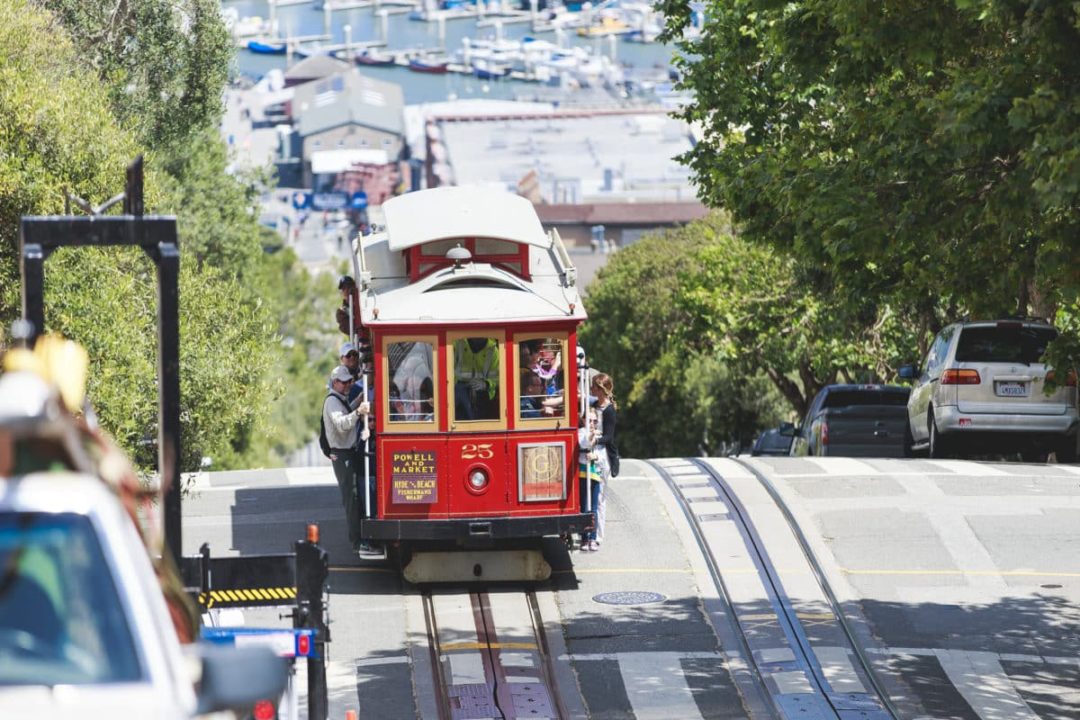
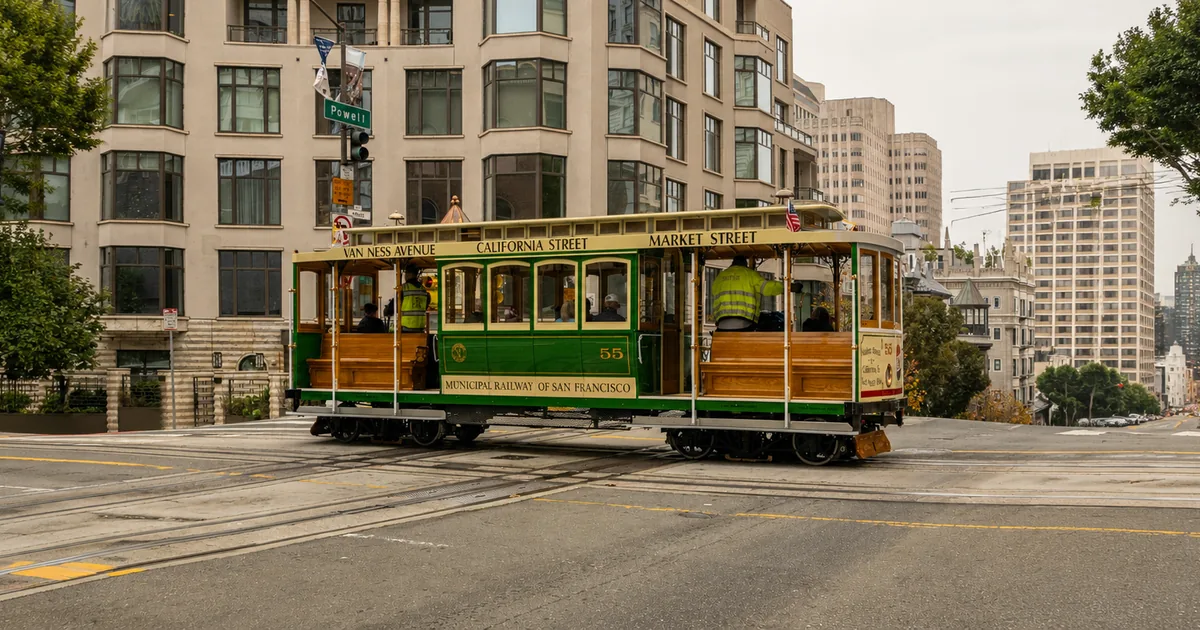
San Francisco cable cars run on three routes. Powell-Hyde and Powell-Mason connect Union Square with Fisherman’s Wharf, both ending within a few blocks of the Fisherman’s Wharf Sign where Dylan’s Tours meets, and the California Street line crosses Nob Hill from the Financial District to Van Ness Avenue. Board at a stop up the line to skip the longest waits.
San Francisco’s cable cars have been climbing the city’s hills since 1873, and they’re the last manually operated system of their kind in the world. There’s no engine on board. The gripman pulls a lever that clamps onto a cable running beneath the street to get moving, then releases it and works the brakes to stop.
Riding one is simple once you know a few local details, like which line passes the top of Lombard Street, how to skip the long wait at Powell and Market and which side of the car has the best view. This guide covers all three routes, tickets and fares, where to hop on, cable car etiquette and the free Cable Car Museum, so you can work it into the rest of your trip.
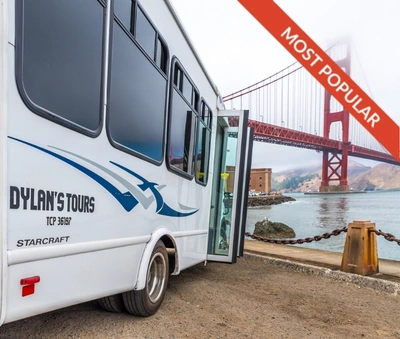
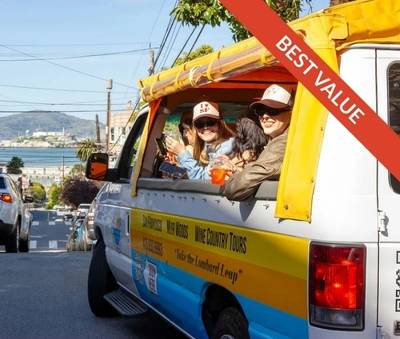
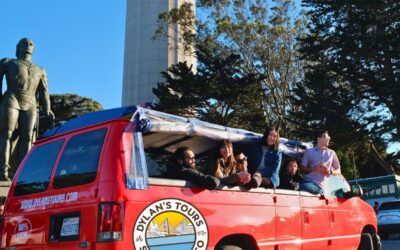
We’ve led small-group tours around San Francisco for 20+ years. If you’d like a local guide along, the Lombard Leap drives down the crooked block of Lombard Street in a small open-air vehicle, and our full lineup covers the Golden Gate Bridge, Muir Woods, Alcatraz and wine country.
How San Francisco Cable Cars Work
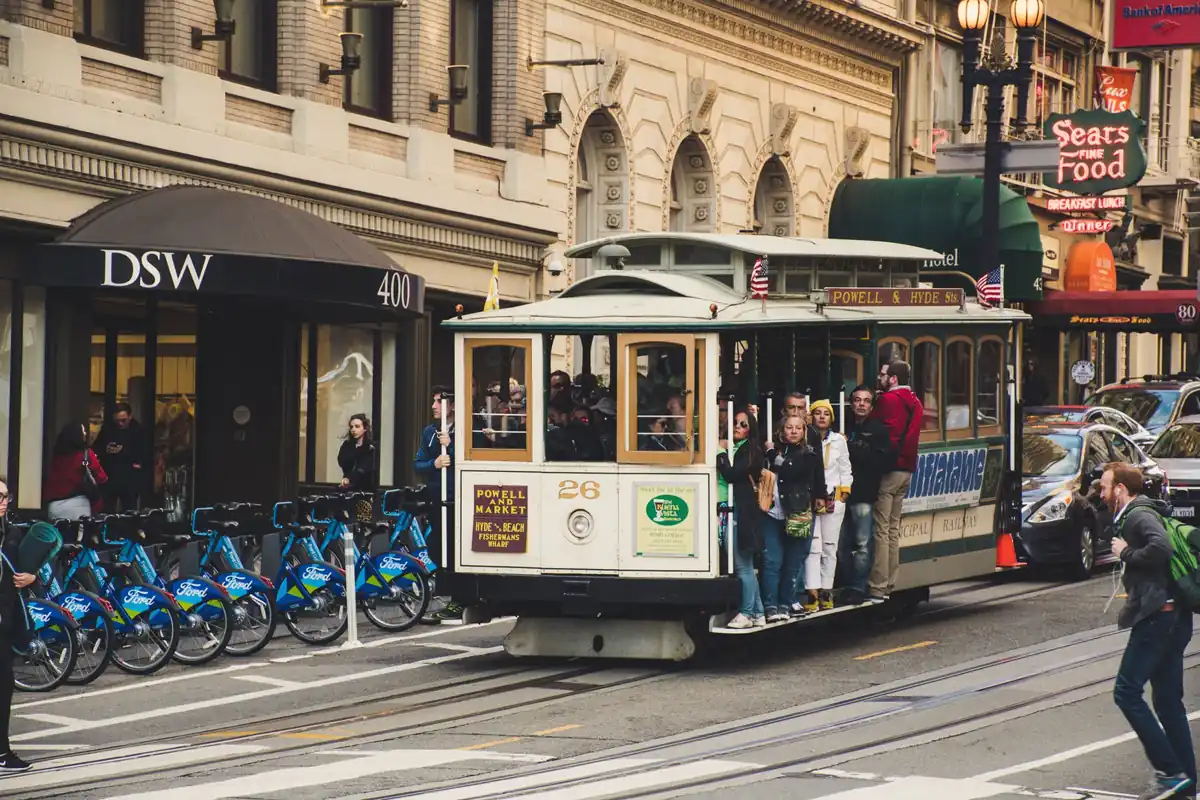
The story goes that Andrew Hallidie came up with the idea after watching a horse-drawn streetcar slide backward down a wet, cobblestoned hill, dragging its team of horses with it. He set out to build a car that ran on a cable instead, and on September 1, 1873, his Clay Street line began regular service. The design caught on, and other cities went on to build systems of their own.
Every cable in the system runs from the powerhouse at Washington and Mason Streets, where electric motors turn giant winding wheels that pull continuous loops through channels under the street at a steady 9.5 mph. Each car carries a grip that reaches down through a slot between the rails, along with three separate braking systems for the city’s steep hills.
A few dates shaped the system you ride today:
- 1906: The earthquake and fire destroyed almost the entire Powell Street fleet, and cars stored outside the fire zone were moved over to replace them.
- 1947: The mayor tried to shut the cable cars down, and Friedel Klussmann and a citizens’ committee fought the plan and won.
- 1964: The system was designated a National Historic Landmark.
- 1982 to 1984: The tracks, carbarn and powerhouse were completely rebuilt.
Today the powerhouse doubles as the free Cable Car Museum, and we walk through what to see there below. It sits on Nob Hill, which our San Francisco neighborhood guide covers in more detail.
The Three San Francisco Cable Car Routes
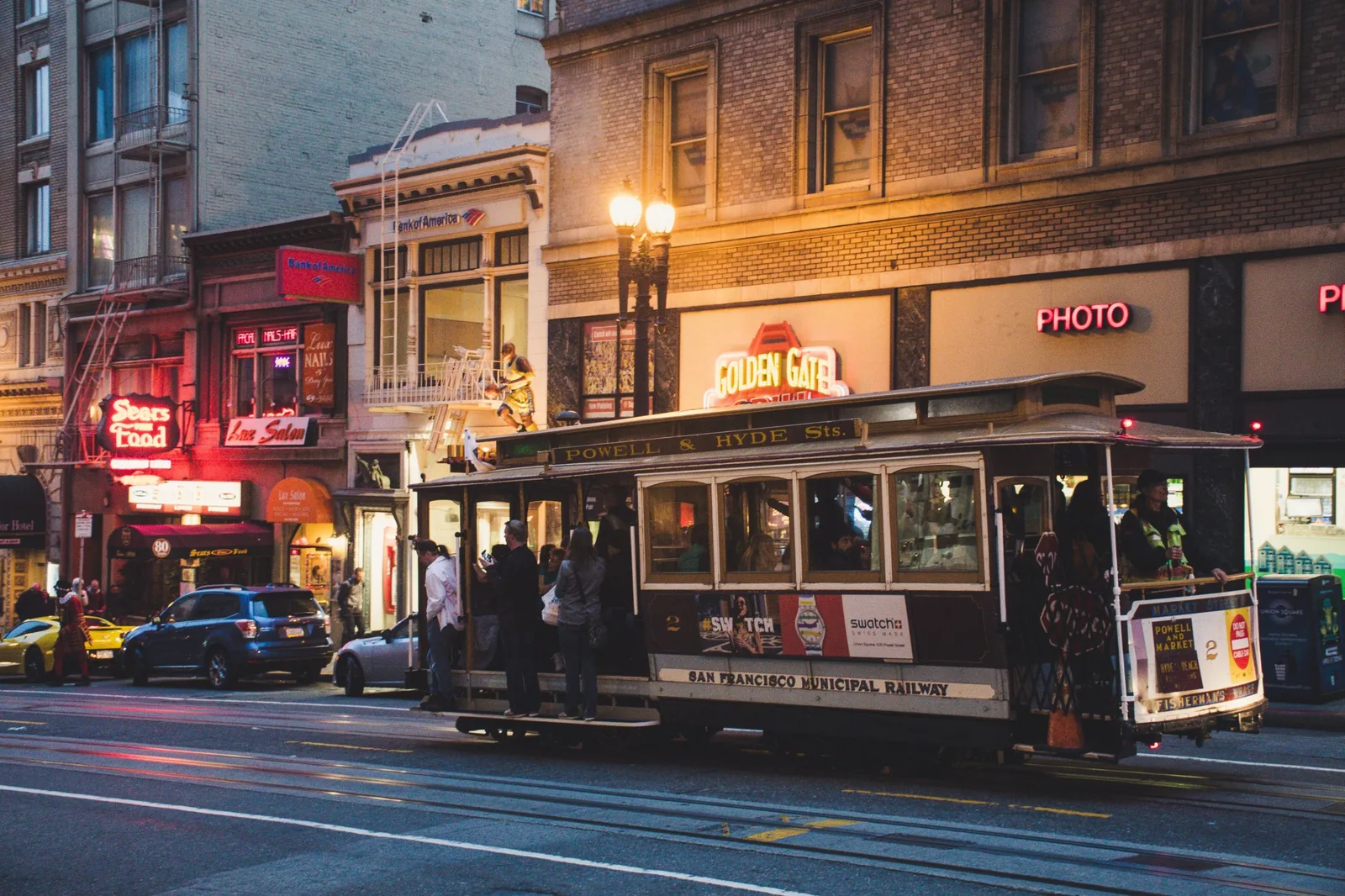
Two of the three lines share a turntable at Powell and Market Streets and climb Nob Hill together before splitting at Jackson Street. The third keeps to California Street for its whole run. You can board or step off at any stop along the way, marked by a brown-and-white cable car sign post, and each line stops every block or so. The stops listed below are the ones closest to the big sights.
| Line | Starts | Ends | Ride it for |
|---|---|---|---|
| Powell-Hyde | Powell and Market Streets | Hyde and Beach Streets | Lombard Street and bay views |
| Powell-Mason | Powell and Market Streets | Bay and Taylor Streets | North Beach and Fisherman’s Wharf |
| California Street | Drumm Street | Van Ness Avenue | Nob Hill and shorter lines |
Powell-Hyde Line
Powell-Hyde has the hills and the views. After the split at Jackson Street, the cars climb Russian Hill, pass the top of Lombard Street’s crooked block and drop down Hyde Street with the bay and Alcatraz straight ahead. It’s also the youngest of the three, created in 1957 when the city merged and trimmed its cable car routes.
Powell-Hyde cars stop at nearly every cross street along Powell Street, Jackson Street and Hyde Street, and SFMTA’s Powell-Hyde route page lists every stop. The three below are the main ones for sightseeing:
- Start at Powell and Market: The turntable sits a block from Union Square.
- Stop at Hyde and Lombard: Step off at the top of Lombard Street’s crooked block, where the corner looks out toward Coit Tower and the Bay Bridge.
- End at Hyde and Beach: The last stop is beside Aquatic Park and a short walk from Ghirardelli Square, and the Buena Vista, where San Francisco’s first Irish coffee was poured in 1952, sits at the end of the line.
Our guide to where to eat in San Francisco covers more of the classic spots around Fisherman’s Wharf.
Powell-Mason Line
Powell-Mason has followed the same route since 1888, and it drops you in the middle of Fisherman’s Wharf. Outbound, it runs along Mason Street and down Columbus Avenue through North Beach before turning onto Taylor Street for the final stretch.
Along the way, cars stop at nearly every cross street on Powell, Mason, Columbus and Taylor, and SFMTA’s Powell-Mason route page lists every stop. Three are especially handy for visitors:
- Start at Powell and Market: Same turntable as Powell-Hyde, where crews swing each car around by hand.
- Stop at Mason and Filbert: A block west of Washington Square in North Beach.
- End at Bay and Taylor: A few blocks from Pier 45, and three blocks along Taylor Street from Jefferson Street and the Fisherman’s Wharf Sign, where our tours meet.
On the return trip toward Market Street, both Powell lines stop at the Cable Car Museum at Washington and Mason.
California Street Line
Locals ride this line more than the other two, and it usually has the shortest wait. The route runs in a straight line along California Street, using bigger cars than the Powell lines that can be driven from either end.
Cars stop at nearly every cross street from Drumm to Van Ness, and SFMTA’s California Street route page lists every stop. These three are the most useful for a first ride:
- Start at California and Drumm: A short walk from the Ferry Building at the foot of Market Street.
- Stop at California and Grant: The edge of Chinatown, with Old St. Mary’s Cathedral on the corner. Our guide to San Francisco’s Chinatown covers the temples, alleys and fortune cookie factory nearby.
- Stop at California and Taylor: The top of Nob Hill, across from Grace Cathedral and Huntington Park.
San Francisco Cable Car Tickets and Fares
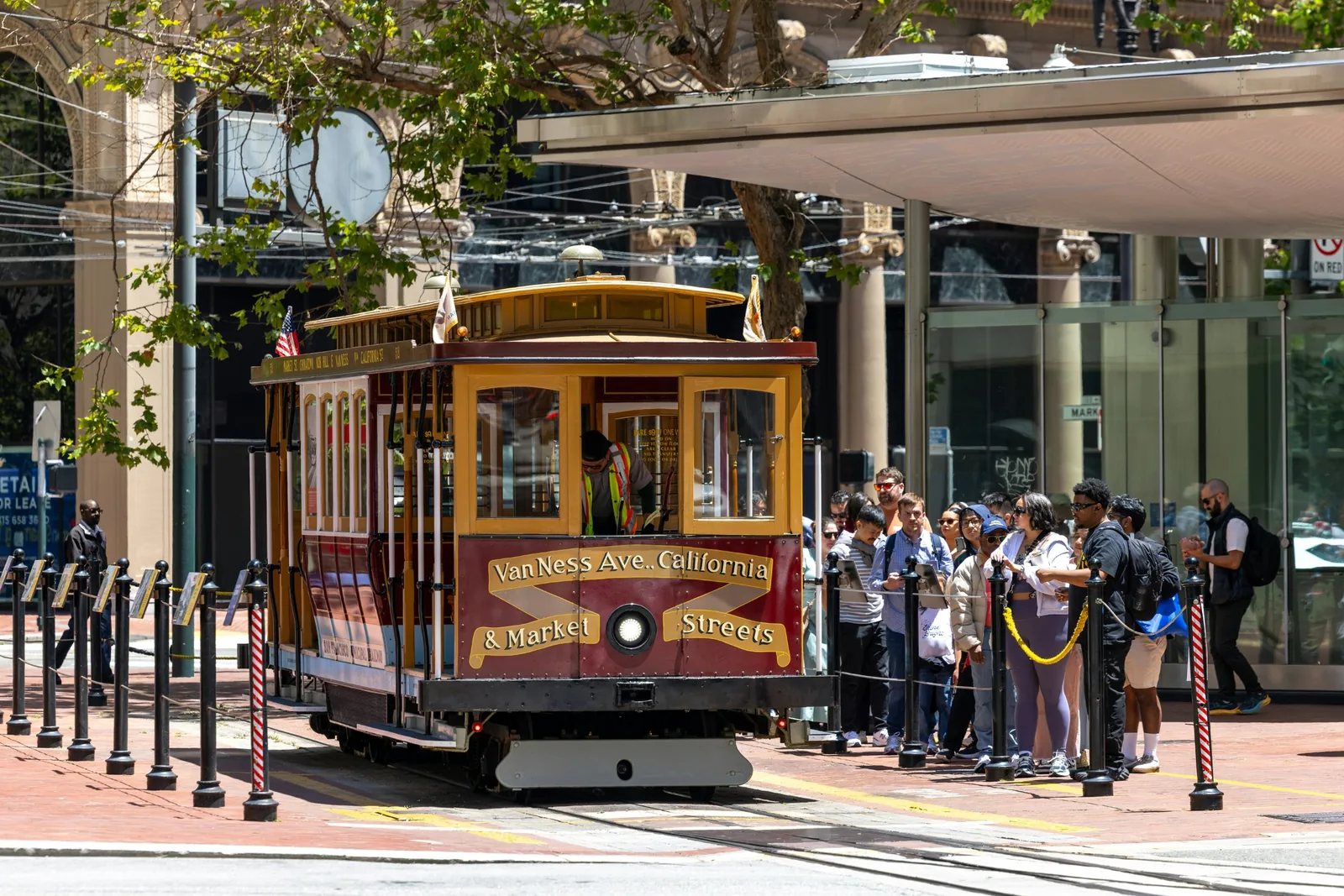
A single-ride ticket covers one trip in one direction, with no transfers between cars or lines, so stepping off partway and boarding again means paying a second time.
Starting on January 4, 2027, a one-way ride will cost $12, and a new $18 Cable Car Plus pass will cover one day of unlimited rides on cable cars and the rest of Muni for one adult and up to two youth 18 and under. If you’d like to hop on and off all day, that’s the pass to get. The one-way fare is scheduled to end on January 3, 2028, so always check SFMTA’s fares page for the most current prices and passes before you ride.
There are three ways to pay:
- Clipper or a contactless card. Hand your Clipper card, contactless bank card or phone to the conductor, who taps it on a handheld reader.
- MuniMobile. The MuniMobile app sells cable car tickets. Buy ahead and activate the ticket when you board.
- Ticket booths. Booths at the Powell and Market and the Hyde and Beach turnarounds sell paper tickets. The California Street line has no booth.
Staying downtown puts the Powell and Market turnaround within walking distance, and our guide to the best hotels in Union Square has options close to the line.
Cable Car Routes to San Francisco’s Top Sights
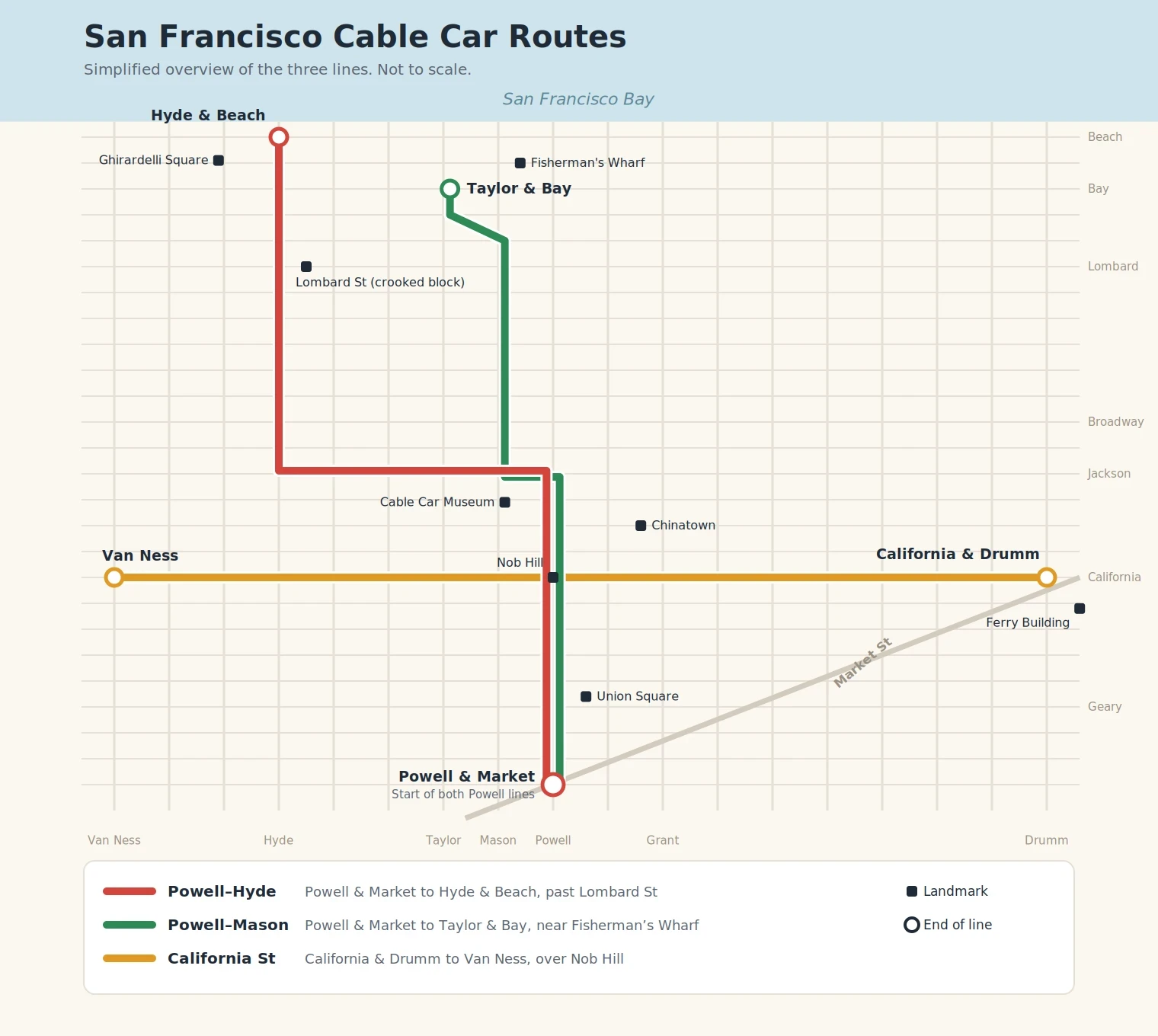
Use this table to pick the line and stop for each sight.
| To see | Ride | Get off at |
|---|---|---|
| Union Square | Powell-Hyde or Powell-Mason | Powell and Geary |
| Chinatown and Old St. Mary’s Cathedral | California Street | California and Grant |
| Grace Cathedral and Huntington Park | California Street | California and Taylor |
| Cable Car Museum | Powell-Hyde or Powell-Mason, toward Market Street | Washington and Mason |
| Washington Square in North Beach | Powell-Mason | Mason and Filbert |
| The crooked block of Lombard Street | Powell-Hyde | Hyde and Lombard |
| Ghirardelli Square, Aquatic Park and the Buena Vista | Powell-Hyde | Hyde and Beach |
| Jefferson Street and the Fisherman’s Wharf Sign | Powell-Mason | Bay and Taylor |
| Ferry Building | California Street | California and Drumm |
Where to Board the Cable Car Without the Long Line

The longest lines form at the turnarounds, especially Powell and Market and Hyde and Beach, where most riders start. Walk a few blocks along the route and board at a regular stop, and the wait is usually much shorter.
- Powell and O’Farrell or Powell and Geary. Powell and O’Farrell is two blocks up from the Powell and Market turntable and Powell and Geary is three, both on the shared route of the two Powell lines.
- A block or two up Hyde Street. Heading back from the Wharf on Powell-Hyde, skip waiting in line at Hyde and Beach and walk uphill to the next stop.
- Off-peak hours. Lines at the busiest turnarounds are usually shortest first thing in the morning and later in the evening.
Wave as the car approaches so the gripman knows to stop. If it pulls up full, SFMTA runs Powell-Hyde cars about every 10 minutes through the middle of the day, so the next one isn’t far behind.
How to Ride the Cable Car Like a Local
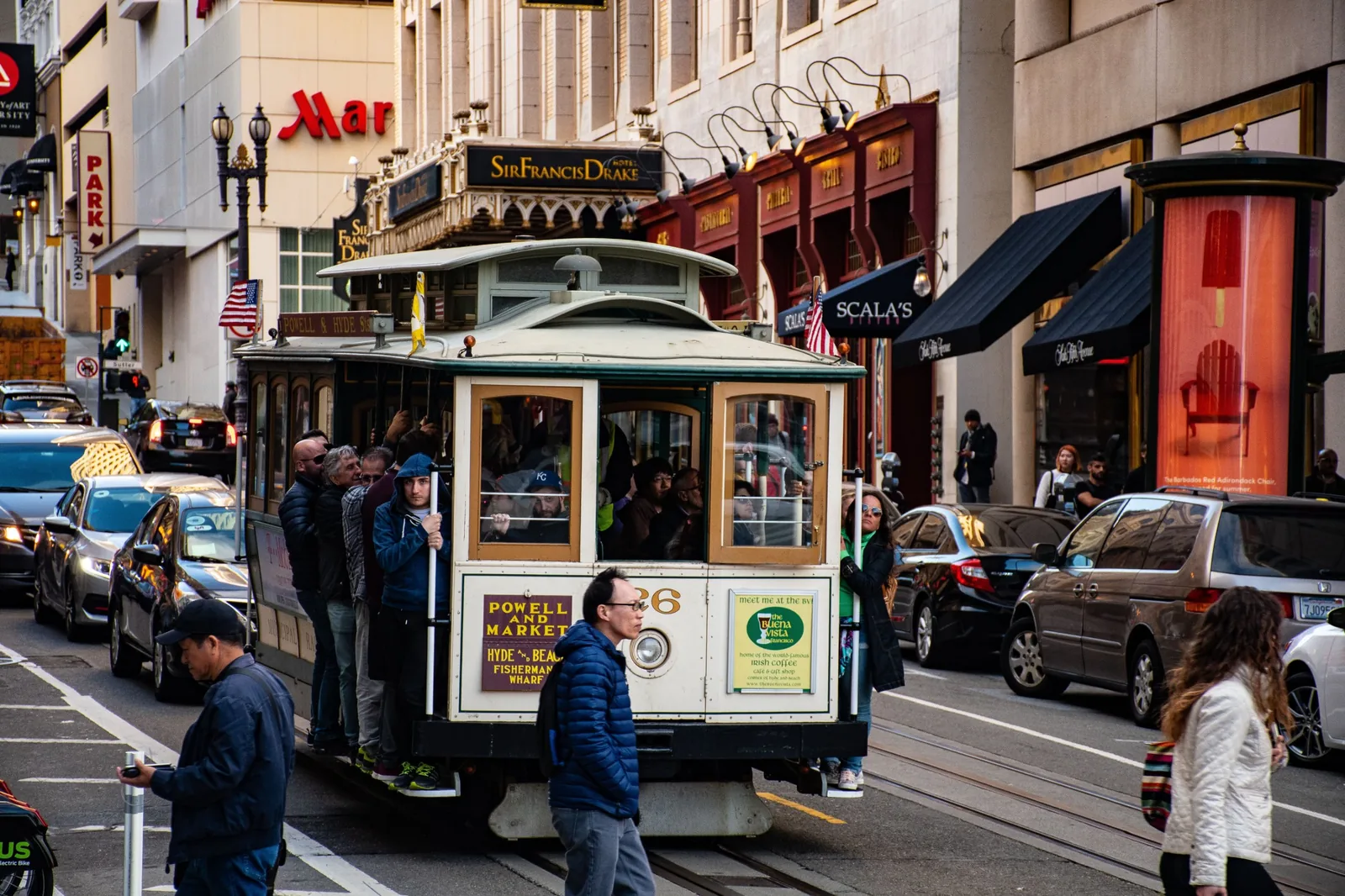
On the Powell lines, ride on the right side of the car heading toward Fisherman’s Wharf and the left side heading back to Union Square, which keeps the skyline and the bay on your side, with Alcatraz ahead on the Powell-Hyde descent. The outside benches and running boards have the best views, and they fill first.
- Keep a firm grip. On the running board, hold the pole and keep your body close to the car.
- Tell the crew your stop. Mention it to the gripman or conductor when you board, or call out “next stop, please” as you get close.
- Step off once the car stops. Wait until the car comes to a complete stop, then check for traffic before you cross the street.
Visit the Free Cable Car Museum on Nob Hill
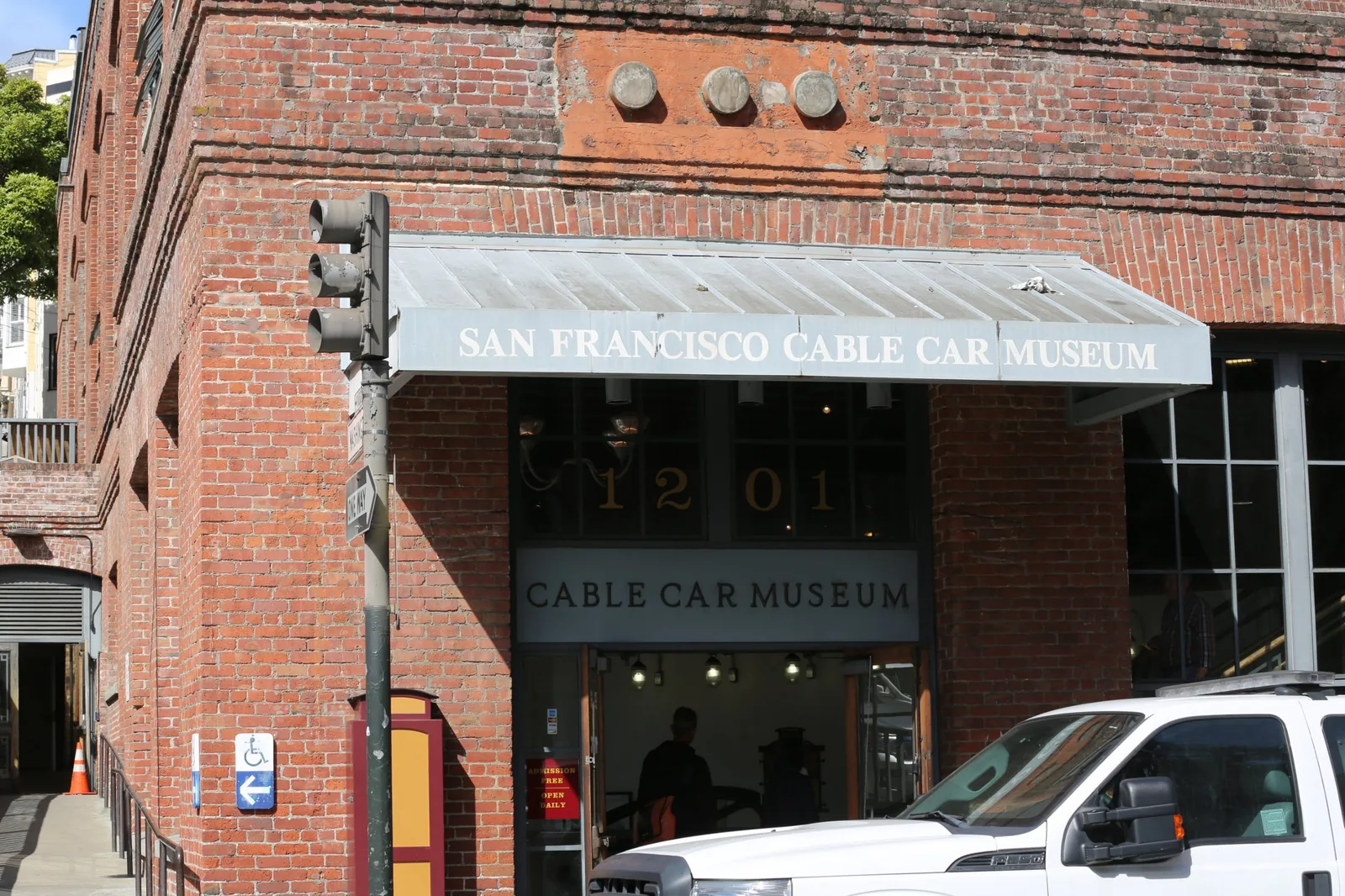 Credit Photo: Tobias Kleinlercher / Wikipedia, via Wikimedia Commons, CC BY-SA 3.0
The Cable Car Museum sits inside the working powerhouse and carbarn at 1201 Mason Street, on the corner of Washington Street, and admission is free. From the viewing decks you watch the winding wheels pull every cable in the system, and a downstairs viewing area shows the cables running in from under the street. The collection includes Clay Street Hill Railroad grip car 8, the only surviving car from Hallidie’s original company.
Both Powell lines stop outside at Washington and Mason, and California Street riders can get off at Mason Street, within three blocks of the door. The museum is open Tuesday through Sunday and closed Mondays, Thanksgiving, Christmas and New Year’s Day, and a ramp on the Washington Street side provides wheelchair access. Plan on 45 minutes to an hour.
See More of San Francisco With Dylan’s Tours
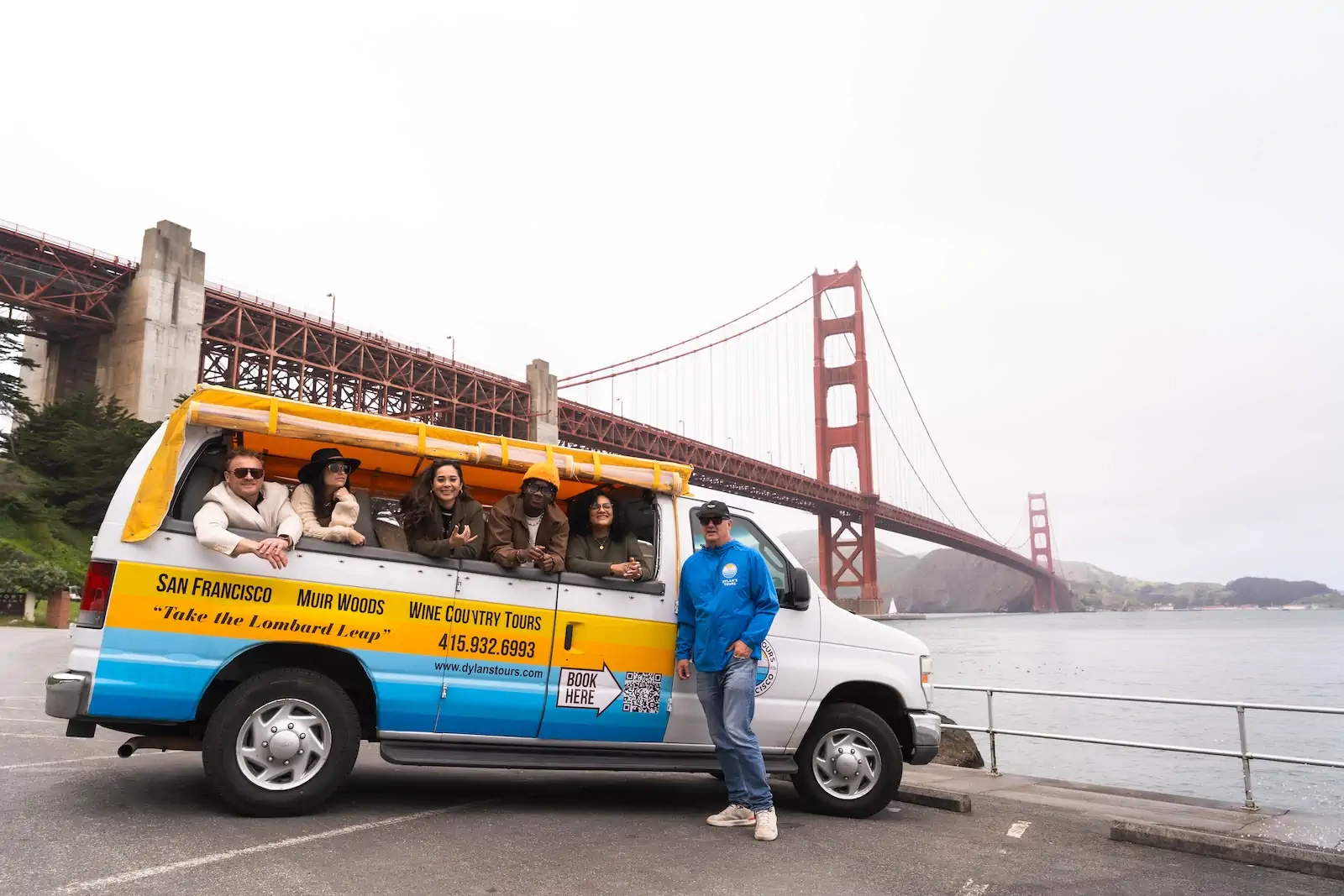 Experience the Golden Gate Bridge from one of San Francisco’s best viewpoints.
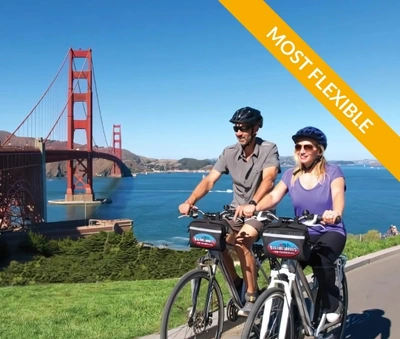
The cable cars cover downtown, Nob Hill and the north waterfront. For the Golden Gate Bridge and the redwoods, our four-hour Half Day Famous Tour with Muir Woods pairs a guided drive through the city’s neighborhoods with a ride across the Golden Gate Bridge and up to 90 minutes in Muir Woods, and it meets at the Fisherman’s Wharf Sign, three blocks from the Powell-Mason turntable.
With more time, the Full Day Famous Tour with Muir Woods adds a lunch stop in Sausalito, and the Half Day Famous Tour with Muir Woods and Alcatraz adds official Alcatraz tickets.
Book direct with code SF10 for $10 off.
FAQ About the San Francisco Cable Car
How much does it cost to ride the cable car in San Francisco?
Starting January 4, 2027, a one-way cable car ride will cost $12, and an $18 Cable Car Plus pass will cover one day of cable car and Muni travel for one adult and up to two youth 18 and under. Check SFMTA’s fares page for current prices before you ride.
Which cable car line is best for visitors?
Powell-Hyde is the most scenic of the three, with Lombard Street, the bay and Alcatraz along the way, and it ends near Ghirardelli Square. The California Street line usually has the shortest wait, and Powell-Mason ends in the middle of Fisherman’s Wharf.
Which cable car stops at the top of Lombard Street?
The Powell-Hyde line stops at Hyde and Lombard, at the top of Lombard Street’s crooked block. To ride down the curves themselves, the Lombard Leap drives down the crooked block in a small open-air vehicle.
How long is the cable car ride to Fisherman’s Wharf?
SFMTA schedules the Powell-Hyde run from Powell and Market to Hyde and Beach at about 20 minutes. Cable car rides generally take 10 to 25 minutes, depending on the line and traffic.
Do San Francisco cable cars run at night?
Yes. All three lines run daily from around 7 a.m. into the evening, and SFMTA’s route pages list the schedule and last cars for each line.
Are San Francisco cable cars wheelchair accessible?
SFMTA notes that cable cars are not equipped with accessible boarding. The free Cable Car Museum has a ramp entrance on Washington Street, so visitors who use a wheelchair can still see the cars and machinery up close.