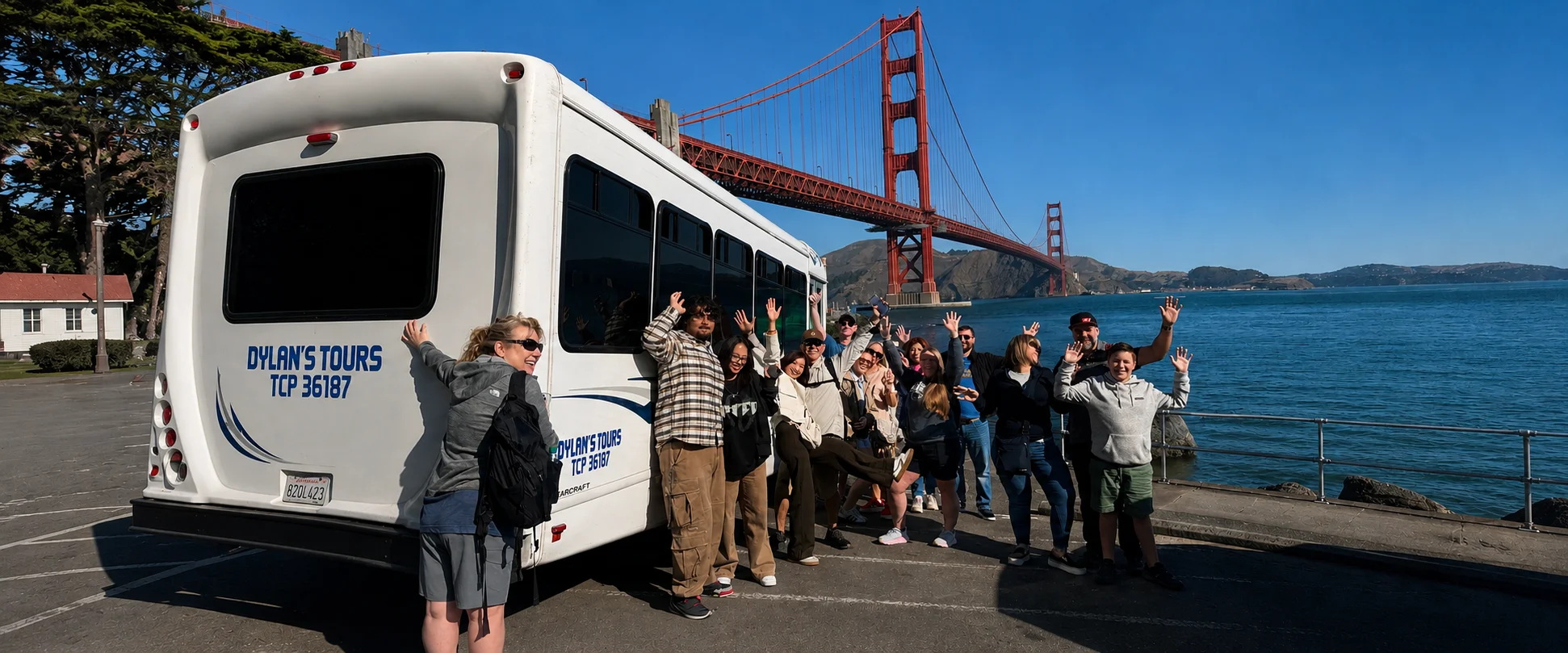

Is San Francisco safe to visit? Yes. Dylan’s Tours has run small-group tours of San Francisco since 2003, and our founder was born here. Citywide crime fell 25 percent in 2025, with property crime down 27 percent. Stay in the main visitor areas, leave nothing visible in your car, and you will have a good trip.
Safety is one of the first things people ask us about before they book. The news does not always report what you find on the ground. The reality is that San Francisco is one of the most beautiful cities in the world, and most first-time visitors leave wondering what all the worry was about.
Twenty-five cents, a color flier from Kinko’s, and a 1990 Dodge Caravan. That is what Dylan David started this company with, in the city he was born in, and he’s raising a family here. As someone who has grown up here his whole life, Dylan is the best person to give you a straight answer.
Dylan’s Tours has led small-group tours of San Francisco for more than 20 years, with 5,700+ five-star reviews and local guides who know the city firsthand. Most first-time visitors start with Dylan’s Famous Tour with Muir Woods, or you can compare the full lineup of San Francisco tours and pick what fits your trip.
Here is what we tell them, and it is the same thing we would tell a friend.
Is San Francisco Safe to Visit in 2026?
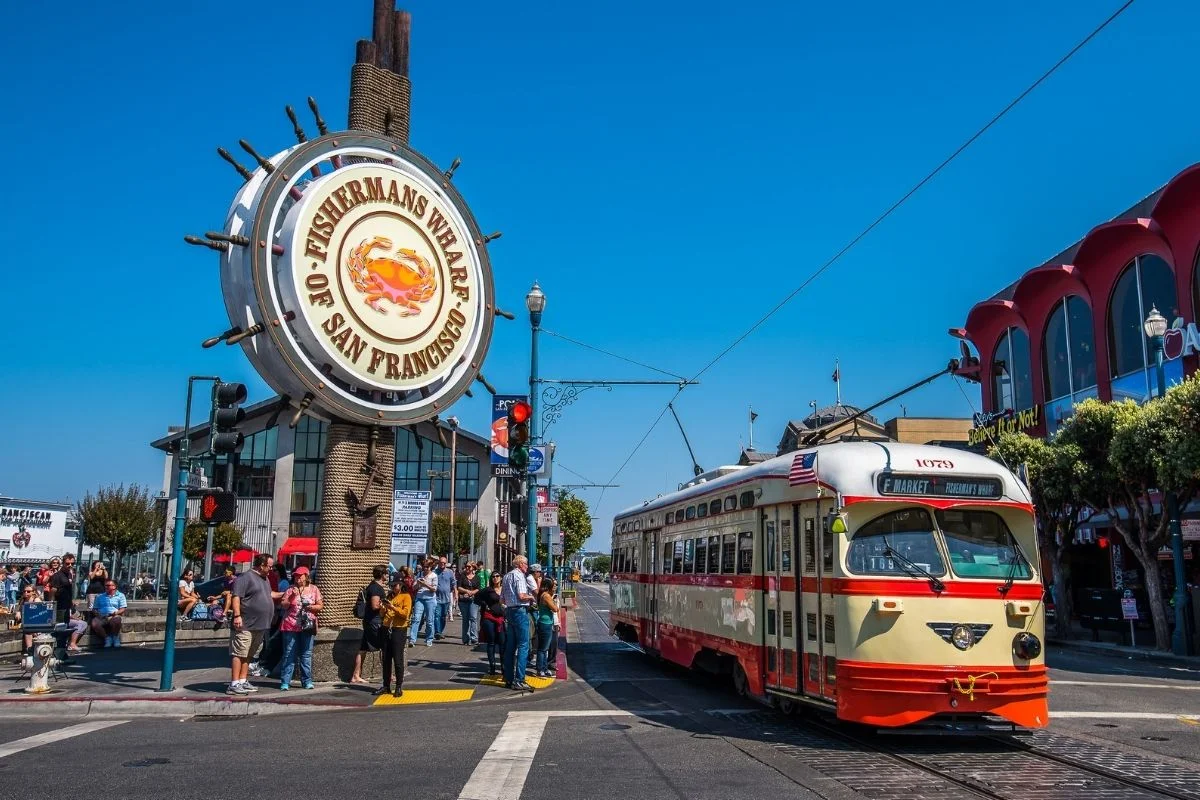
San Francisco is generally safe for tourists. The neighborhoods you came to see, Fisherman’s Wharf, North Beach, Chinatown, the Embarcadero, Union Square, Golden Gate Park, the Presidio, are busy, well-trafficked places full of people doing what you are doing.
So when people ask us the question directly, the answer is that San Francisco is safe, in the same way that London and Chicago are safe. It is also a major American city, which means it comes with the realities of one. You will see homelessness, and you may walk past someone having a hard day. That happens in New York and Seattle too, and it is a different thing from danger.
The concerns to plan around are property crime, mainly theft from parked cars, and two or three specific areas that have nothing you need. Both are easy to handle once someone tells you where they are.
Has The Crime Rate in San Francisco Gone Down?
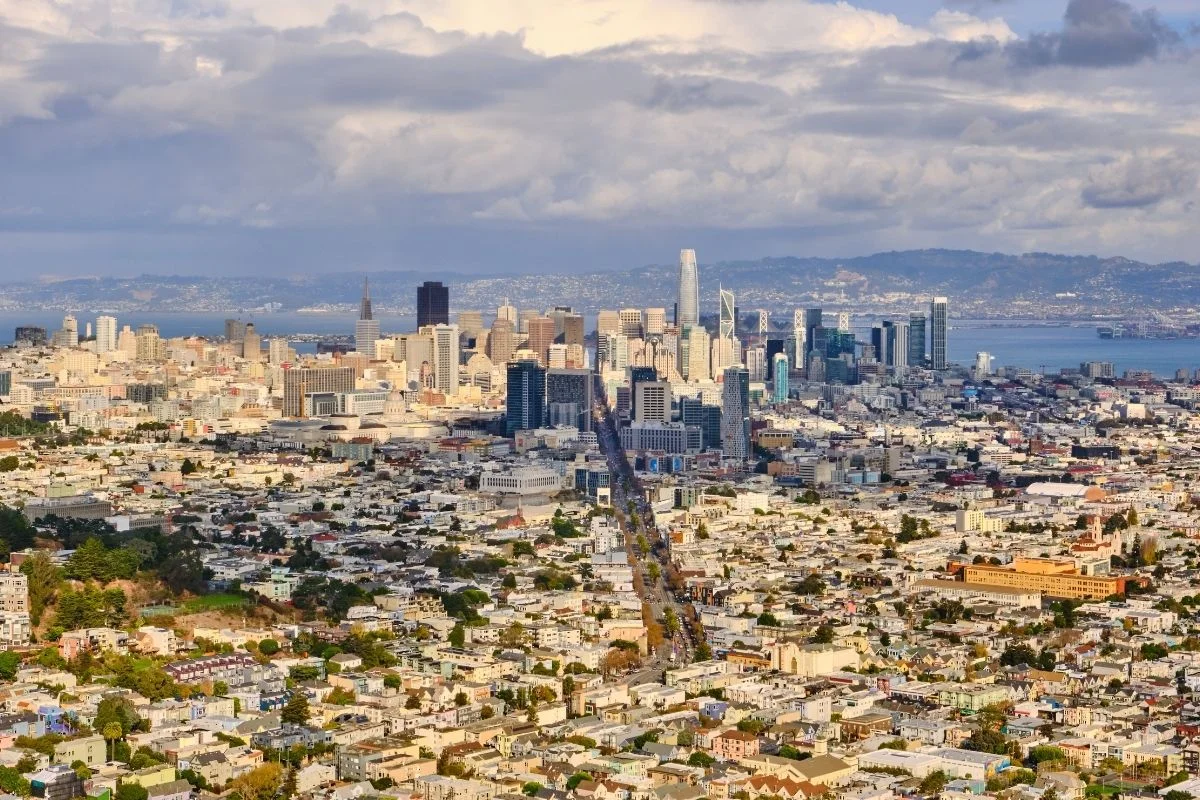
Crime in San Francisco has come down sharply, and further than most coverage has caught up with.
In 2025, the San Francisco Police Department’s year-end figures showed overall crime in the city down 25 percent. Property crime dropped 27 percent. Violent crime dropped 18 percent.
Those declines run across every major category, with robbery and auto burglaries among them. Public safety was the central promise of the new mayor, Daniel Lurie, who took office in 2025, and the crime rate has kept falling through Mayor Lurie’s first year.
Read the crime statistics next to 2023 and 2024 and the direction is hard to miss. Citywide, your odds of being the victim of violent crime as a visitor moving between tourist spots in the daytime are very low, and lower than they were the last time most of those scary headlines ran.
Residents and visitors are both seeing a different city than the one described in 2022. Safety in San Francisco has improved faster than its reputation.
Which San Francisco Neighborhoods Should Visitors Avoid?
The San Francisco neighborhoods visitors should avoid are the Tenderloin and parts of the Sixth Street corridor in SoMa. That is the honest short list.
The Tenderloin sits between Union Square and Civic Center, roughly bounded by Market Street on one side, which is exactly how visitors end up walking into it without meaning to. You might see open drug use and street activity that most travelers find unsettling. There is nothing in those blocks you need for your trip.
What a San Franciscan would tell you is not to fear it, just to route around it. Walk a street or two north toward Union Square, or take a Lyft the six blocks instead of cutting through on foot after dark.
Everywhere a visitor spends time is fine. Pier 39, Coit Tower, the Ferry Building, Crissy Field, the Golden Gate Bridge, Japantown, Noe Valley, the Castro, Dolores Park, all of it. Our complete San Francisco neighborhood guide covers what each one is known for.
Where Should Visitors Stay in San Francisco?
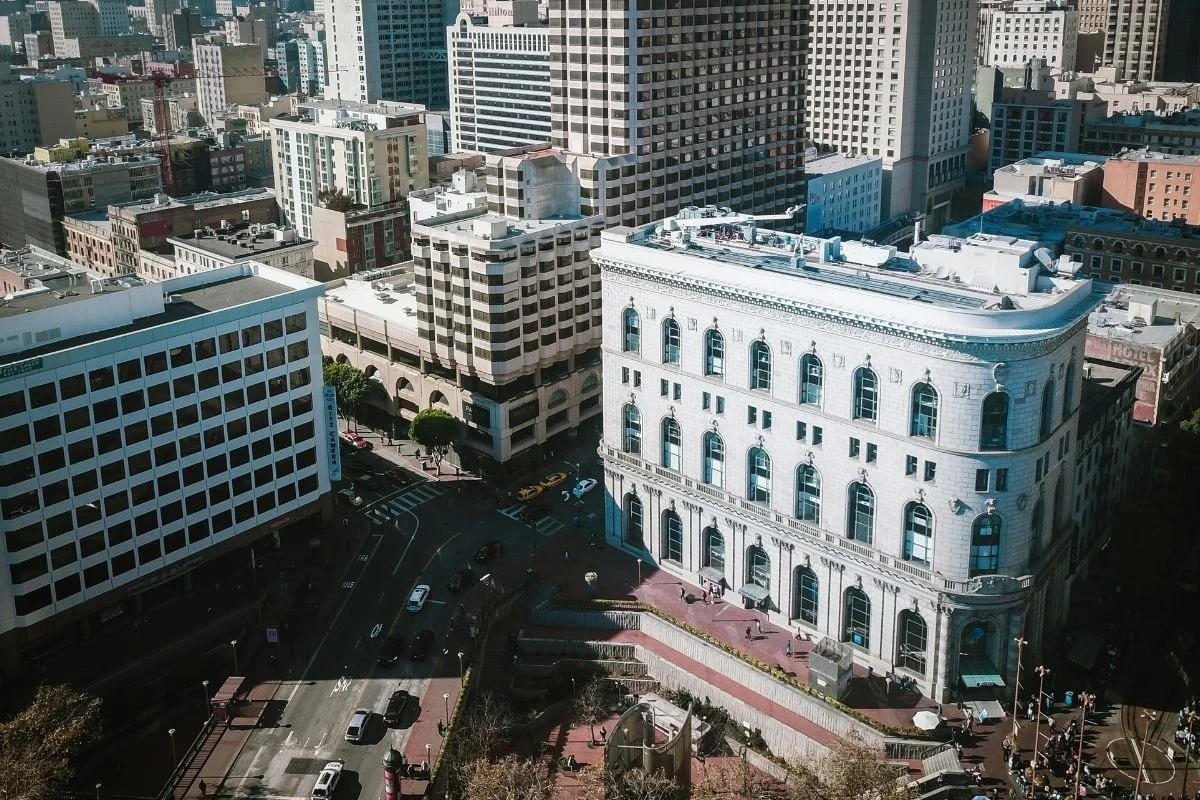
Visitors to San Francisco mostly stay near Union Square, at the Wharf, or on Nob Hill, and all three work. Near Union Square puts you on the cable cars and inside walking distance of Chinatown and the shopping. The Wharf puts you near Pier 39, the ferries and our meeting point. Nob Hill is quieter and steeper.
If you are in town for a conference at the Moscone Center, the blocks immediately around it are fine in the daytime, and the walk back at night is better handled with a rideshare than on foot through SoMa. Mission Bay near the ballpark is newer, calmer and popular with families who want space.
The one thing we would say about staying near Union Square is to look at exactly which side of it your hotel sits on, because a few blocks west puts you into the Tenderloin area. Our guide to the best hotels in Union Square points you to the right side of it.
Is It Safe to Walk Around San Francisco at Night?
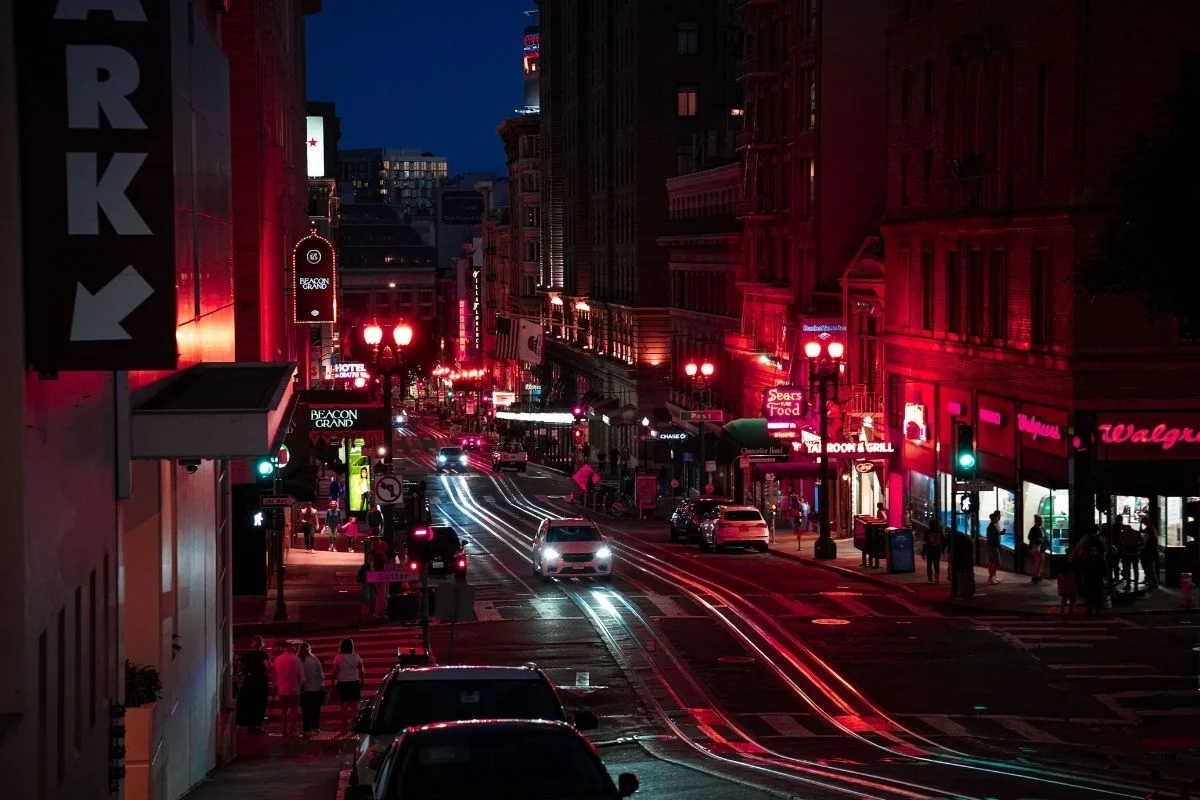
Yes, walking around San Francisco at night is safe in the busy neighborhoods, as long as you bring the street smarts you would use in any city. North Beach, the Marina, Hayes Valley, the Mission and the Wharf all stay lively into the evening, with full restaurants and people on the sidewalks well after dinner.
For a neighborhood-by-neighborhood breakdown of walking around San Francisco at night, our forum thread runs through which areas stay easy after dark and which to be cautious about.
Are Car Break-Ins Still a Problem in San Francisco?
Theft from parked cars has long been the crime most likely to touch a visitor here. Car break-ins have fallen hard along with everything else, but the rule locals live by has not changed.
Leave nothing visible in your car, and that includes a jacket, a charging cable and an empty backpack. A car with bare seats and an open glove compartment is not worth anyone’s time. Some garages have security cameras and record license plates on the way in, and that helps, but an empty interior does more.
The wider point is that plenty of our guests decide they would rather not have a car at all. Street parking near the Wharf and downtown runs upward of 40 dollars a day, the hills and one-way streets are their own event, and Muir Woods needs a reserved parking slot before you even set off.
Skipping the car takes parking, break-ins, and a trunk full of luggage off your plate in one move, which is why so many visitors let us do the driving. Dylan’s Famous Tour with Muir Woods handles the bridge, the redwoods, and the parking headache in one go.
The Travel Tips Locals Would Give You
Everything comes down to a few simple habits. Keep these in your back pocket and you’ve handled the parts of city safety that are actually in your control.
- Wallet in a front pocket, not a back one.
- Purse zipped and in front of you on a crowded cable car.
- Phone out once you have stopped walking, not while you move.
- Nothing visible in a parked car, ever. An empty interior is the only deterrent that works.
- Main streets after dark rather than the quiet cut-throughs.
- A jacket with you, because the fog turns July evenings cold.
- Ask a local which way to walk out of a hot spot. We will tell you in about four seconds and we like being asked.
Is Public Transportation in San Francisco Safe?
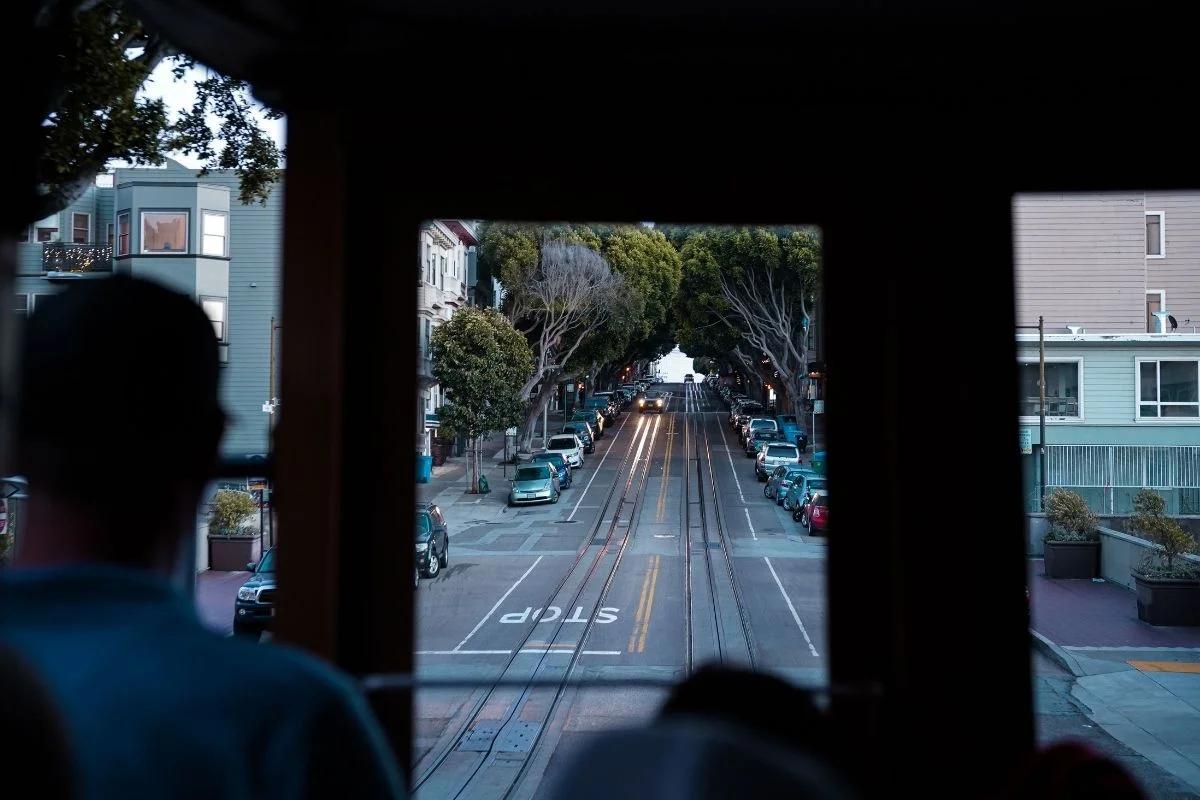
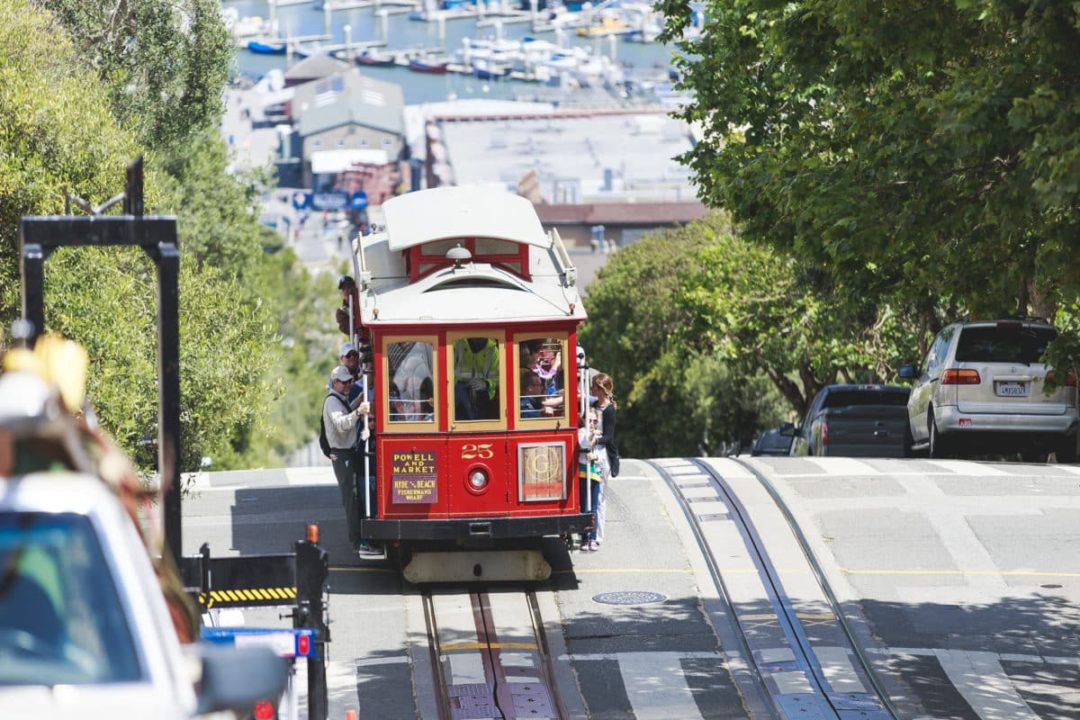
Public transportation in San Francisco is fine for visitors. BART and Muni are used by the whole Bay Area every day. The cable cars, the F-line streetcars and the Muni buses will get you almost everywhere a tourist wants to go.
Late at night BART stations get quiet, so sit in populated cars and near other passengers. Pickpockets work crowded Powell Street platforms and packed cable cars, so keep your wallet in a front pocket rather than a back one. That is the same advice you would get in Rome.
How Does San Francisco Compare With Other Cities?
San Francisco compares better with other big American cities than its reputation suggests, and sits roughly in line with them on violent crime. Where San Francisco has stood out historically is property crime, especially auto burglaries, which ran higher here than in most comparable cities for years and is the reason the reputation stuck.
That gap has narrowed a lot. San Francisco was also named the 15th-safest city in the world for travelers in Berkshire Hathaway Travel Protection’s 2026 safest-destinations report, one of only two U.S. cities on the list alongside Honolulu. If you have travelled comfortably in Barcelona, Rome or Chicago, you will be comfortable here.
Is San Francisco Safe for Families With Kids?
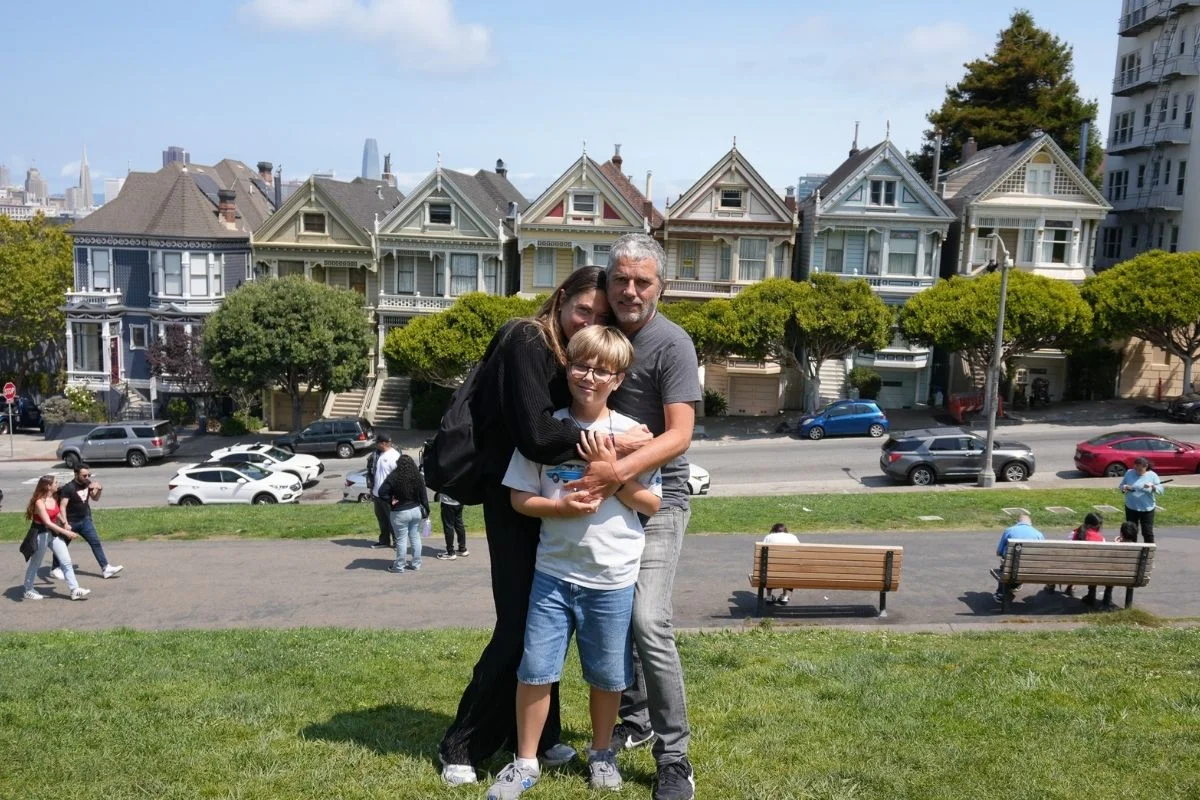
San Francisco is safe for families with kids, and we take kids on tours constantly. One guest brought their 10 year old grandson on the Famous Tour and told us afterward that he learned a lot and loved it. Another family did a tour with their two boys, then came back years later because the boys asked to do it again.
Families tend to stay near the Wharf, Union Square or Nob Hill, all of which are close to our meeting point and easy to walk in the daytime. If you are travelling with children, our guide to things to do in San Francisco with kids has plenty to build a day around.
Is San Francisco Safe for Solo Female Travelers?
Whether San Francisco is safe for solo female travelers is a question we take seriously rather than brush off. The city is walkable, busy and heavily visited, and a solo traveler in the main areas is rarely alone in any real sense. The same rules apply as anywhere: stick to populated streets, tell someone your plan, and trust your read on a block.
A small group tour also hands you a few hours with a guide and a handful of other travelers, which is why a fair number of solo guests book one on their first day. One repeat guest, Lynnet_D, came back and did it again on her own: “I did it by myself. I enjoyed it that much.”
Skip the Guesswork With a Local Guide
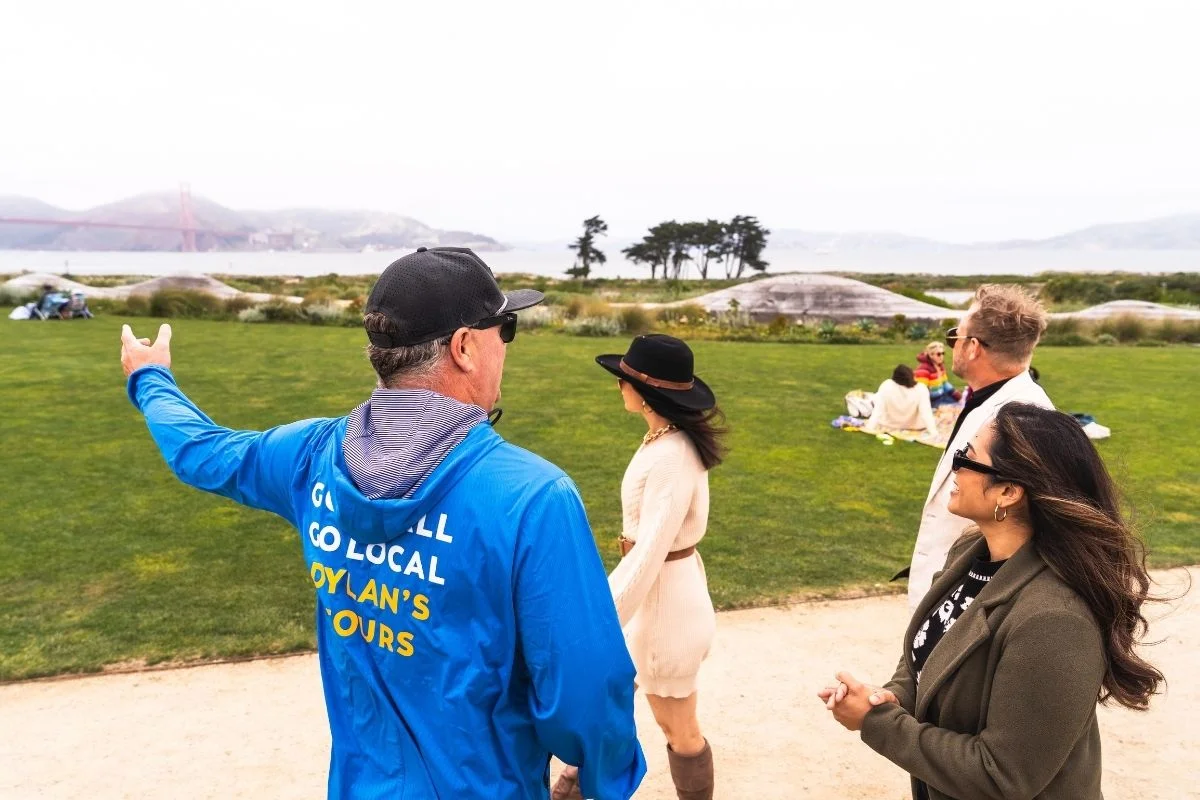
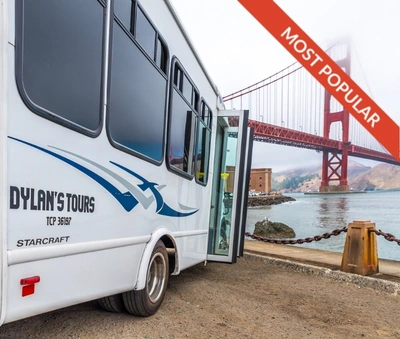
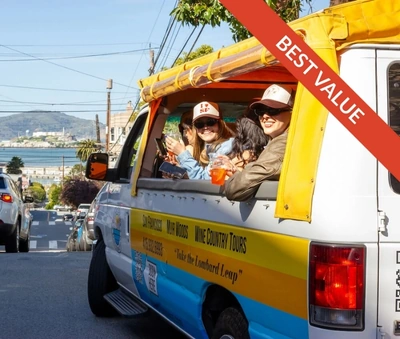
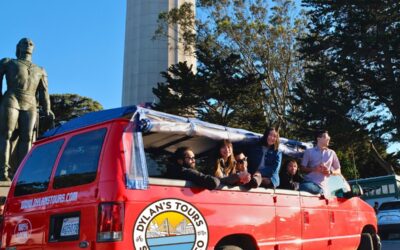
On a tour with us you are not standing on a corner deciding which way to walk. You are with a guide who knows these routes, in a small group, in a mini bus or an open-air vehicle rather than a coach. You skip the rental car, the parking, and the accidental detour through blocks you would rather avoid. If you are adding Alcatraz, we handle the ferry timing too.
We have more than 5,700 five-star TripAdvisor reviews as shown on our site, and a lot of them come down to one feeling: I just showed up and everything was handled. A cruise passenger who booked a private tour with our guide Rolando put it this way: “his driving was safe and courteous, and his upbeat energy was contagious.”
If you want the city to yourselves, our private city tours are built for that. If you want the Golden Gate Bridge and the redwoods, the Famous Tour is the one, and booking direct with code SF10 saves you 10 dollars.
That Dodge Caravan was retired a long time ago, and the answer Dylan gives has not changed since he was driving it.
Frequently Asked Questions
Is the Tenderloin safe for tourists?
The Tenderloin is the one neighborhood most visitors are told to walk around rather than through, particularly after dark. It borders Union Square, so it is easy to enter by accident. Nothing in it is on your itinerary, so route around it.
Is BART safe at night?
BART is fine for visitors and quieter late at night. Sit in populated cars, stay near other passengers, and if a platform feels empty and you would rather not wait, take a rideshare instead.
Is Fisherman’s Wharf safe?
Fisherman’s Wharf is safe. It is among the busiest and most visited parts of SF, full of families through the day and into the evening. Our shop is right there at 2820 Taylor Street.
Are car break-ins still common in San Francisco?
Car break-ins in San Francisco have dropped substantially, and they remain the crime most likely to affect a visitor. Leave nothing visible in a parked car, ever, even for ten minutes.
Is Golden Gate Park safe?
Golden Gate Park is safe in the daytime and busy with runners, families and cyclists. It is very large and gets dark and empty after sunset, so treat the evening the way you would treat any big city park and head for the exits before it empties out.
Should visitors worry about earthquakes in SF?
Earthquakes are part of life in San Francisco and buildings are engineered for them. Most visitors never feel one. If you do, the guidance is to drop, cover and hold on until the shaking stops, and your hotel will have instructions posted.
Do I need to rent a car in San Francisco?
You do not need to rent a car in San Francisco, and most visitors are happier without one. Parking is expensive and scarce, the hills and one-way streets are demanding, and Muir Woods requires a reserved parking slot. Muni, BART, rideshares and tours cover nearly everything a visitor wants to do.