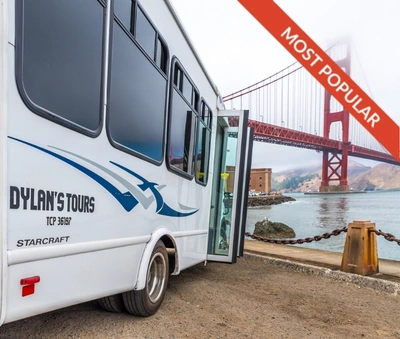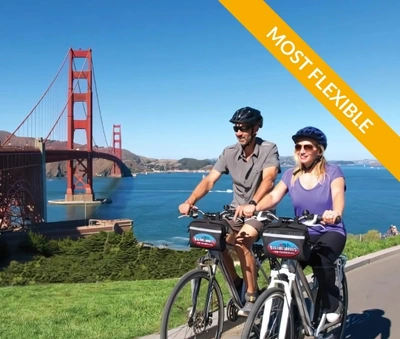
The view from Fort Point. Photo: Carol M. Highsmith, Library of Congress.
Why runners stop to touch a sign beneath the Golden Gate Bridge, and the man who put it there.
If you’re going to see the Golden Gate Bridge, we recommend going down to Fort Point. You get a close look at the underside of the bridge, a Civil War-era fort to explore, and a waterfront walk that’s worth leaving time for.
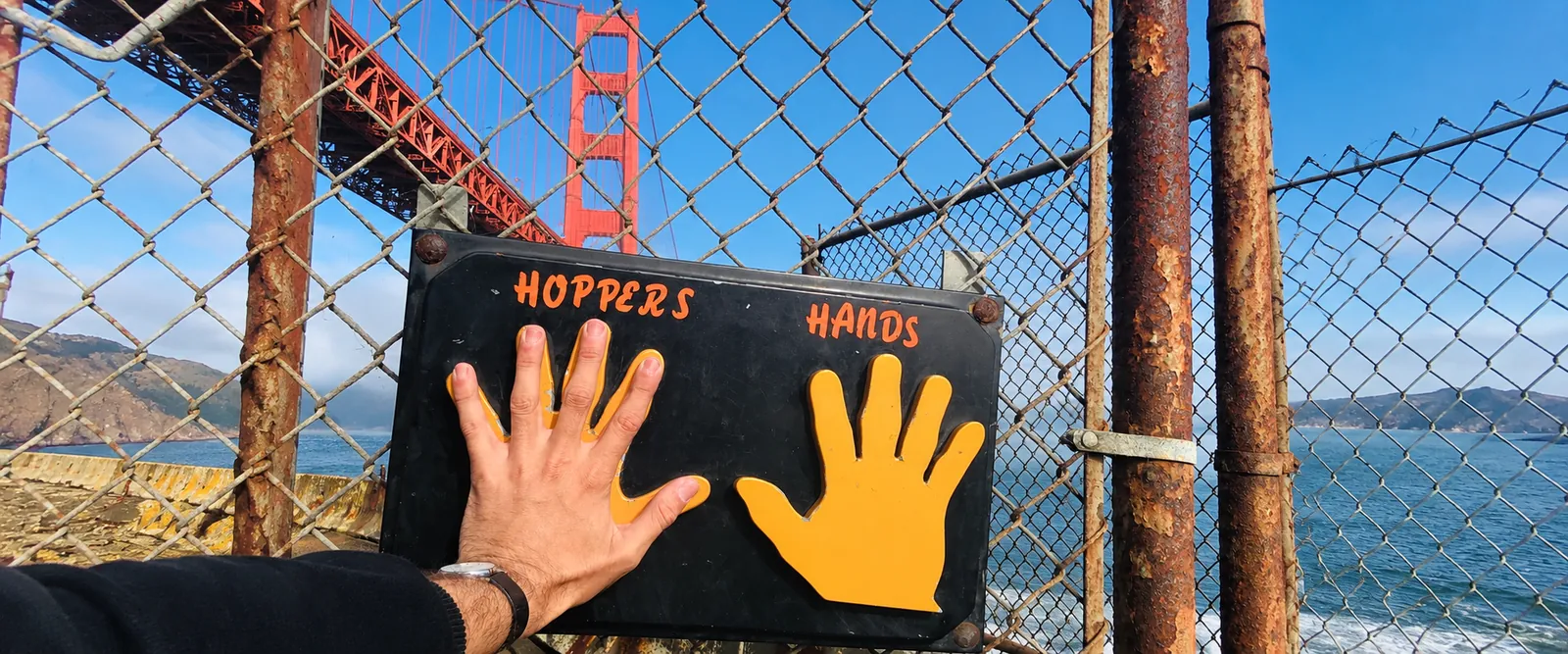
You might also see someone run up to a fence, slap a pair of painted hands, and run away again.
That’s normal here.
The sign is called Hopper’s Hands. It’s named after Ken Hopper, a Golden Gate Bridge ironworker who noticed runners touching the fence at the end of their route and decided to give them something better to aim for. More than two decades later, people are still doing it.
Our guide Patrick recently stopped by to share the story. He’s been guiding in San Francisco for more than 20 years, and this is exactly the kind of detail that’s easy to miss when you’re busy photographing the bridge.
Who was Ken Hopper?
Hopper worked on the crew that maintained the Golden Gate Bridge. He wasn’t one of the men who built it in the 1930s, although you’ll sometimes find his story mixed up with theirs.
Around 2000, he noticed the runners arriving at the fence beside Fort Point. It was the end of the waterfront route, so they would touch the fence before turning back.
If you’ve ever insisted on reaching a particular tree, corner, or lamppost before finishing a run, you’ll understand. You’ve picked your destination. You want to get all the way there.
Hopper had the bridge’s sign painter make a pair of handprints for them to touch. The habit was already there; he gave it a sign and, eventually, a name people would remember.
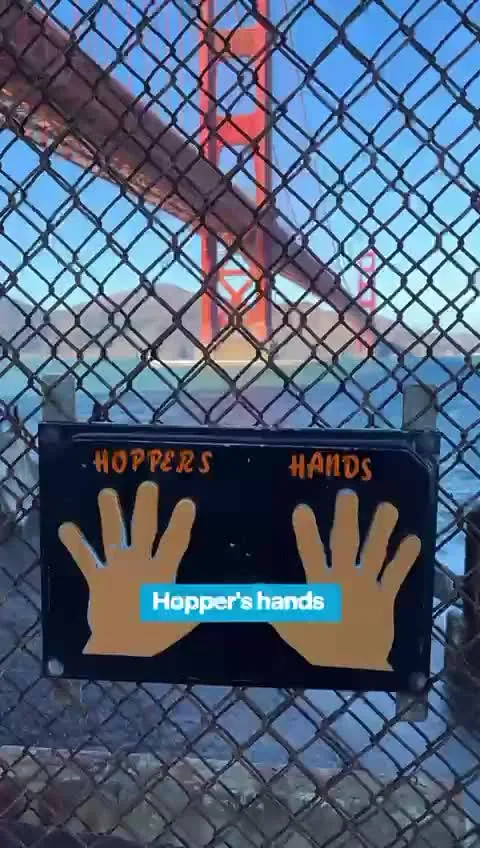
Hopper’s Hands, from Patrick’s visit to Fort Point.
What we like about this story is how little fuss there was. A man at work noticed something people did every day and made it a bit more fun. You don’t need a tour or a history lesson to join in. Once you see someone do it, you know what to do.
The sign has changed over the years. The Parks Conservancy records several versions and color schemes as the hands wore out and were replaced. That seems about right for a sign whose entire purpose is to be touched.
The dogs got their own sign
Hopper also noticed people getting their dogs involved. So he added paw prints closer to the ground. www.parksconservancy.org
Patrick points them out in his video, and they’re worth looking for when you visit. It’s a small detail, but it’s probably the one dog owners will remember.
There’s no rule about how you take part. Some people touch both hands, some give the sign a quick tap, and others stop for a photograph. You’re welcome to do the same after a leisurely walk. Nobody is checking your mileage.
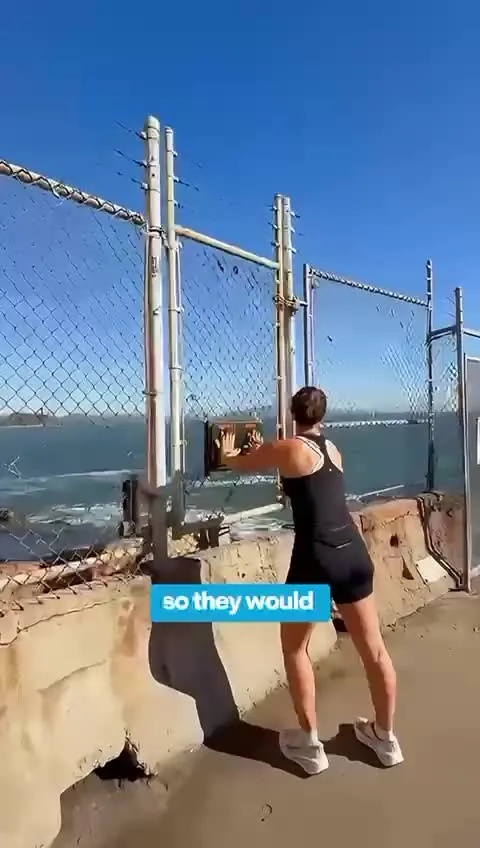
A quick stop at the hands before heading back along the waterfront.
For a runner coming from Crissy Field or farther along the waterfront, this can be the turnaround rather than the finish. You’ve still got the return trip ahead of you. But you’ve reached the bridge, and that’s a pretty good place to stop and catch your breath.
The mix of people is part of the appeal. In Patrick’s footage, cyclists and walkers are gathered nearby while a runner takes her turn at the sign. It’s a visitor attraction that also happens to be part of somebody else’s regular exercise route.
There’s more to Hopper’s story
Newspaper reporting about Ken Hopper describes another part of his work on the bridge: helping rescue people in crisis.
He and other ironworkers used their knowledge of the structure to reach people and help bring them to safety. It was difficult work, and the accounts make clear how much it affected him. artandarchitecture-sf.com
That’s worth knowing when you see his name on the fence. Most people arrive because they’ve heard about a running tradition or want a photo. Behind the sign is someone who spent years caring for the bridge and helping people on it.
You can enjoy the hands without knowing any of that. But it gives you a reason to remember Ken Hopper as well as the place.
Don’t skip the fort beside you
Fort Point deserves more than a quick appearance in the background of your photographs.
The Army began building it in 1853 to defend the entrance to San Francisco Bay. It was completed in 1861, at the start of the Civil War, but never saw combat during that war.
It had already been standing for roughly 70 years when construction of the Golden Gate Bridge began.
The early bridge plans called for removing it. Fortunately, chief engineer Joseph Strauss recognized the value of the building, and the design was changed to preserve it. The steel arch above the fort allowed the bridge’s approach to pass over it.
Once you know that, take another look. The fort isn’t just tucked into a convenient space. The bridge was designed to make room for it. www.goldengate.org
The construction work here was hard going. Storms damaged the temporary trestle used to reach the south tower site. The crews had to deal with the water and weather as well as the engineering. Looking out from Fort Point gives you a better sense of what they were up against than a distant view of the completed bridge does. www.goldengate.org
If the fort is open, go inside. The brick arches and courtyard give you another perspective on the building, and you can spend some time with its history before returning to the waterfront.
How we’d plan a visit
We’d approach through Crissy Field, walking west along the water past the Warming Hut and continuing to the end of Marine Drive. That way, the walk is part of the visit, with time to stop for photographs before you reach the hands.
You can also work Fort Point into a bike outing along the waterfront. Slow down near the fort and give people room around the sign.
Driving is possible, but parking is limited. Muni’s 28 bus stops at the Golden Gate Bridge plaza above the fort, with a walk downhill from there. The commonly signed route includes steps, so plan a different approach if stairs are a problem. www.nps.gov
The hands are outside the fort, and you don’t need to enter the building to see them. Check the National Park Service’s opening hours if you want to explore inside. Accessible parking and first-floor access are available, but not every level or approach is step-free.
Bring a jacket. This is an exposed stretch of waterfront, and sunshine doesn’t necessarily mean it’s warm. Dogs can visit the grounds on leash, though pets aren’t allowed inside the historic fort. www.nps.gov
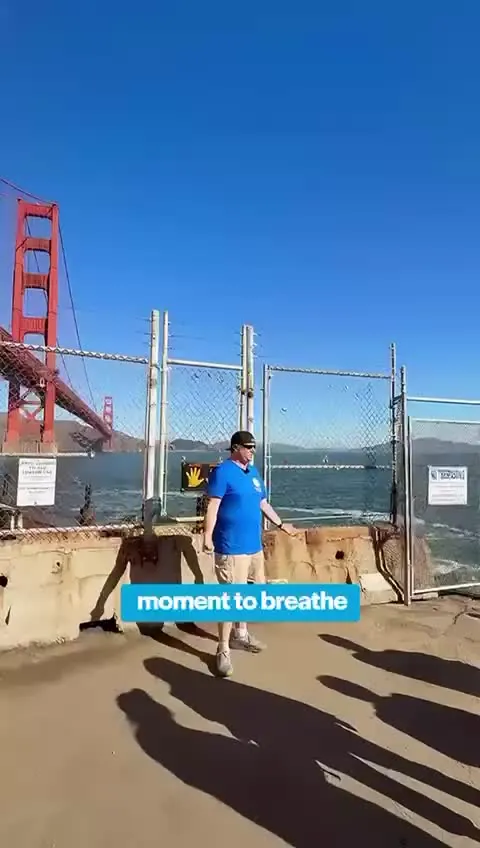
Patrick sharing the story beside the fence.
We stop here on some Dylan’s Tours outings. Patrick’s advice is simple: “Come down to Fort Point and give us a high ten.”
If you’re already planning to see the Golden Gate Bridge, allow some time for this side of it. Walk down to the fort, look for the hands, and take your turn. Now you’ll know why everyone else is doing it.
For more ideas nearby and around the city, see our local guide to San Francisco.